



How Data Analytics Is Transforming Modern NASCAR Racing
What Is Data Analytics in the Context of NASCAR?
Data analytics in NASCAR refers to the systematic collection, processing, and interpretation of performance data to improve race outcomes. It covers everything from how a car handles through Turn 3 to whether a driver should pit under caution or stay out and gamble on track position.
This wasn't always part of the sport. Decades ago, crew chiefs relied almost entirely on experience and gut instinct — listening to the engine, watching tire wear, reading the race by feel. That knowledge still matters, but today it's layered on top of hundreds of data points streaming in every second. The evolution from stopwatch timing to sophisticated real-time analysis has quietly become one of the biggest competitive battlegrounds in the NASCAR Cup Series.
Understanding how analytics works doesn't require an engineering degree. For fans, it's the difference between wondering why a team pitted early and actually grasping the logic behind a call that won — or lost — a race.
The Data NASCAR Teams Actually Collect
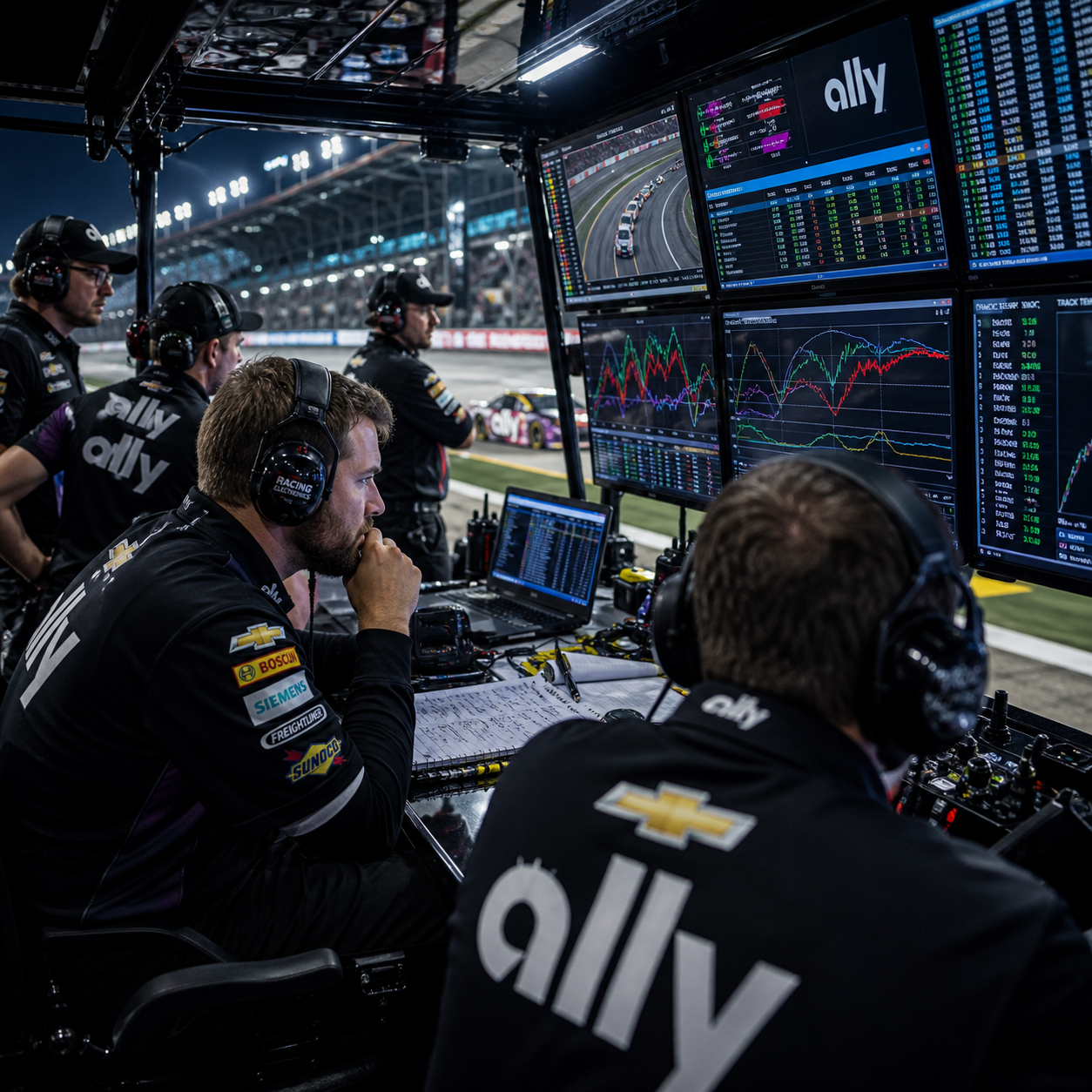
Telemetry data is the backbone of NASCAR analytics — a continuous stream of measurements transmitted from the car to engineers on the pit box in real time. The range of what gets measured is broader than most fans realize.
Modern NASCAR cars carry dozens of sensors monitoring engine RPM, throttle position, brake pressure, fuel consumption, shock absorber travel, and tire temperature. Sensor technology has advanced to the point where teams can track lateral G-forces through every corner, identify the exact moment a driver lifts off the throttle, and measure aerodynamic balance shifts as fuel burns off during a run.
Here's a snapshot of the primary data categories teams work with:
- Engine performance — RPM ranges, oil pressure, coolant temperature, and fuel flow rates
- Vehicle dynamics — suspension travel, steering input, yaw rate, and roll stiffness
- Tire data — surface temperature across the width of the tire, wear patterns, and degradation rates
- Aerodynamics — downforce levels, drag readings, and airflow disruption in traffic
- Driver inputs — throttle and braking traces that reveal driving style and consistency
Track conditions add another layer. Ambient temperature, humidity, and track surface temperature all influence how a car behaves, and teams feed that environmental data into their models alongside the mechanical readings.
How Crew Chiefs and Engineers Use Data in Real Time
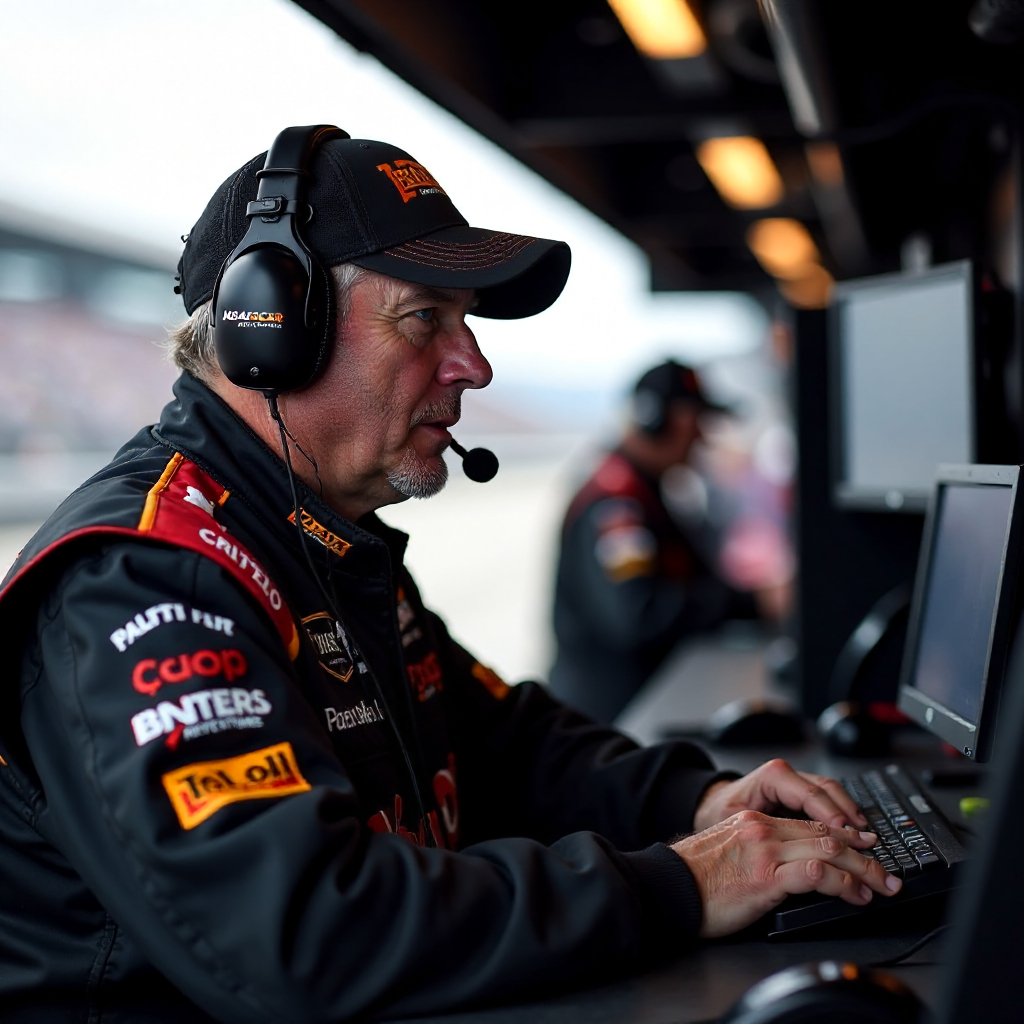
Real-time data analysis during a race is less about drowning in numbers and more about answering one question fast: what does this tell us about the next decision? The crew chief sits at the center of that process, translating data into calls that affect track position, tire life, and ultimately finishing order.
Performance engineers handle the raw data streams, filtering the noise and surfacing what matters. When a car's handling balance starts shifting — say, the rear tires are losing grip faster than expected — the engineer flags it and the crew chief decides whether to adjust the wedge on the next pit stop, change the strategy, or push through.
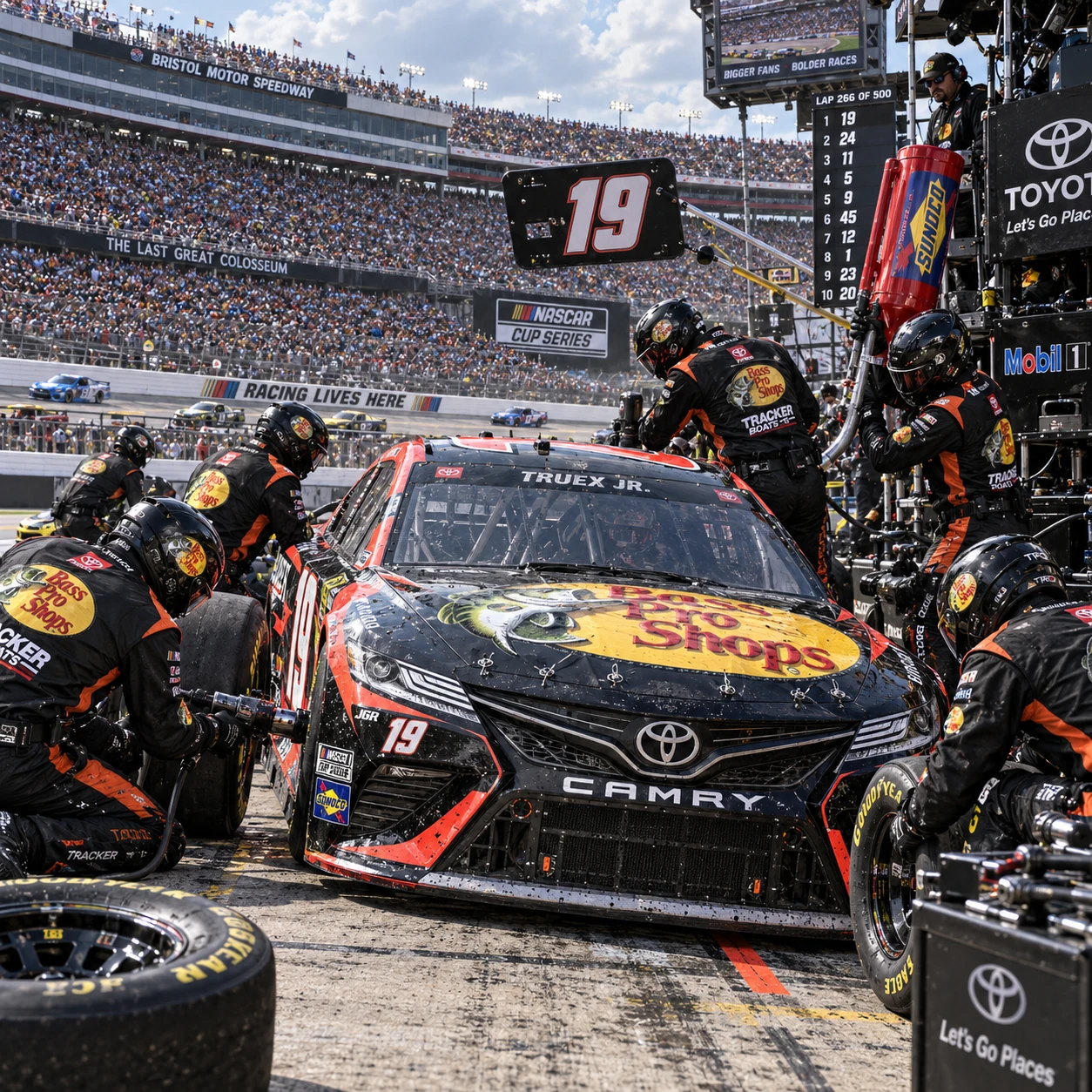
Pit strategy is where data analytics becomes most visible to fans. Fuel mileage calculations are now precise enough that teams know within a fraction of a lap whether they can make it to the end without pitting. When a caution comes out, the crew chief isn't just guessing — they're working from a live fuel model that accounts for the current consumption rate, the distance remaining, and the probable caution length.
Communication between the driver and pit box is constant. Drivers report what they feel; engineers confirm it with data. A driver saying "the car's tight in the center" gets cross-referenced against steering torque and throttle trace data to determine whether it's a setup issue, a tire issue, or a driving style adjustment. That feedback loop is faster and more precise than anything possible before modern telemetry.
Pre-Race Preparation: Simulation and Setup Optimization
Before a single lap is turned in practice, teams have already run thousands of virtual laps. Race simulation software lets engineers model how a car will behave at a specific track under expected conditions, using historical data from previous visits combined with current setup parameters.
Setup optimization is one of the highest-value applications of analytics in NASCAR. Teams arrive at a track with a baseline setup built from data — not just from their own history, but from pattern recognition across multiple seasons. If a particular spring rate combination worked well at a similar 1.5-mile oval in similar weather conditions, that becomes a starting point rather than a blank slate.
Simulation also plays a major role in pit strategy planning. Teams run race scenarios before the event to identify the optimal pit windows, calculate fuel load targets, and stress-test their strategy against likely caution patterns. When a race unfolds differently than expected, having those pre-modeled scenarios in hand makes it easier to adapt quickly rather than starting the decision process from scratch.
The Impact of the Next Gen Car on Data Collection
NASCAR's Next Gen car, introduced for the 2022 Cup Series season, changed the data landscape in ways teams are still working through. The shift to standardized components — a single-lug wheel, spec suspension geometry, and a new chassis architecture — reduced some of the setup variables teams had previously used to differentiate themselves.
On the surface, that sounds like it would flatten the analytics advantage. In practice, it shifted where the competitive edge lives. With less variation in mechanical setup options, teams have invested more heavily in understanding aerodynamic behavior and vehicle dynamics within the tighter constraints the Next Gen platform imposes. The data is still there — it's just pointing toward different optimization targets.
The standardized chassis also created a more level baseline for data comparison across teams. Engineers can now benchmark their car's performance against industry-wide patterns with more confidence that they're comparing apples to apples, rather than trying to account for wildly different mechanical configurations.
Challenges and Limitations of Racing Analytics
Analytics doesn't solve everything, and the teams that use it best are the ones who understand where it breaks down. The most common challenge isn't a lack of data — it's too much of it arriving too fast to act on cleanly.
A crew chief managing a race in real time is making decisions on a timeline measured in seconds. A caution flag comes out, and the call to pit or stay out needs to happen before the pit lane entrance passes. No amount of data infrastructure eliminates the pressure of that moment. The analytics inform the decision; they don't make it.
Hardware limitations also matter. Sensors fail. Data transmission drops out. A tire temperature reading that goes offline for ten laps can leave a gap in the model right when it would have been most useful. Teams build redundancy into their systems, but racing environments are brutal on equipment.
There's also the human factor — and it's not a weakness. Experienced drivers pick up on things sensors can't measure: the feel of the car pushing slightly through a dirty section of track, the way traffic is bunching ahead, the instinct that a restart is about to go sideways. The best teams treat driver feedback and data as complementary inputs, not competing ones. When they conflict, a good crew chief knows which to trust.
What the Future of Data Analytics Looks Like in NASCAR
The next phase of NASCAR analytics will likely be defined by machine learning and AI-assisted strategy tools. Several teams are already experimenting with predictive models that can process live race data and surface strategic recommendations — not to replace the crew chief, but to give them a faster, more complete picture of their options.
Increased data transparency across the sport is another trend worth watching. As NASCAR continues to develop its officiating and competition monitoring infrastructure, more standardized data may become available league-wide, which could both level the playing field and raise the baseline sophistication of analytics across all teams.
For fans, the impact will likely show up as richer broadcast data — real-time fuel mileage projections, tire degradation overlays, and strategy trackers that make the analytical dimension of racing as visible as the on-track action. The sport has always rewarded teams that think clearly under pressure. Data just keeps raising the bar for what "thinking clearly" actually requires.
Frequently Asked Questions
What is telemetry data in NASCAR racing?
Telemetry data is the real-time stream of measurements transmitted from sensors on the car to engineers on the pit box. It includes engine readings, suspension movement, tire temperatures, fuel consumption, and driver inputs like throttle and brake pressure. Teams use this data to monitor car health and make strategic decisions during a race.
How do NASCAR teams use data during a race?
Performance engineers monitor live data streams and flag critical changes to the crew chief — tire degradation spikes, handling balance shifts, or fuel consumption rates that affect pit window calculations. The crew chief uses that information alongside their own race-reading experience to make calls on pit timing, adjustments, and strategy pivots.
Does NASCAR restrict the data teams can collect?
NASCAR does regulate certain aspects of data collection, particularly around standardized components introduced with the Next Gen car. Teams operate within those boundaries but retain significant freedom in how they instrument their cars, process their data, and develop their own analytical systems. Proprietary analytics remain a genuine competitive differentiator.
How has data analytics changed pit stop strategy?
Fuel mileage modeling is now precise enough that teams can calculate pit windows to within a fraction of a lap. Real-time tire wear data helps teams decide whether to take two tires or four, and pre-race simulation runs allow crews to stress-test their strategy against multiple caution scenarios before the race even starts.
What role do performance engineers play on a NASCAR team?
Performance engineers sit between the raw data and the crew chief's decision-making. They monitor telemetry streams, build and update race models in real time, and translate technical readings into actionable information. On larger teams, multiple engineers may specialize in specific areas — engine data, aerodynamics, or race strategy simulation — working in coordination during a race weekend.