



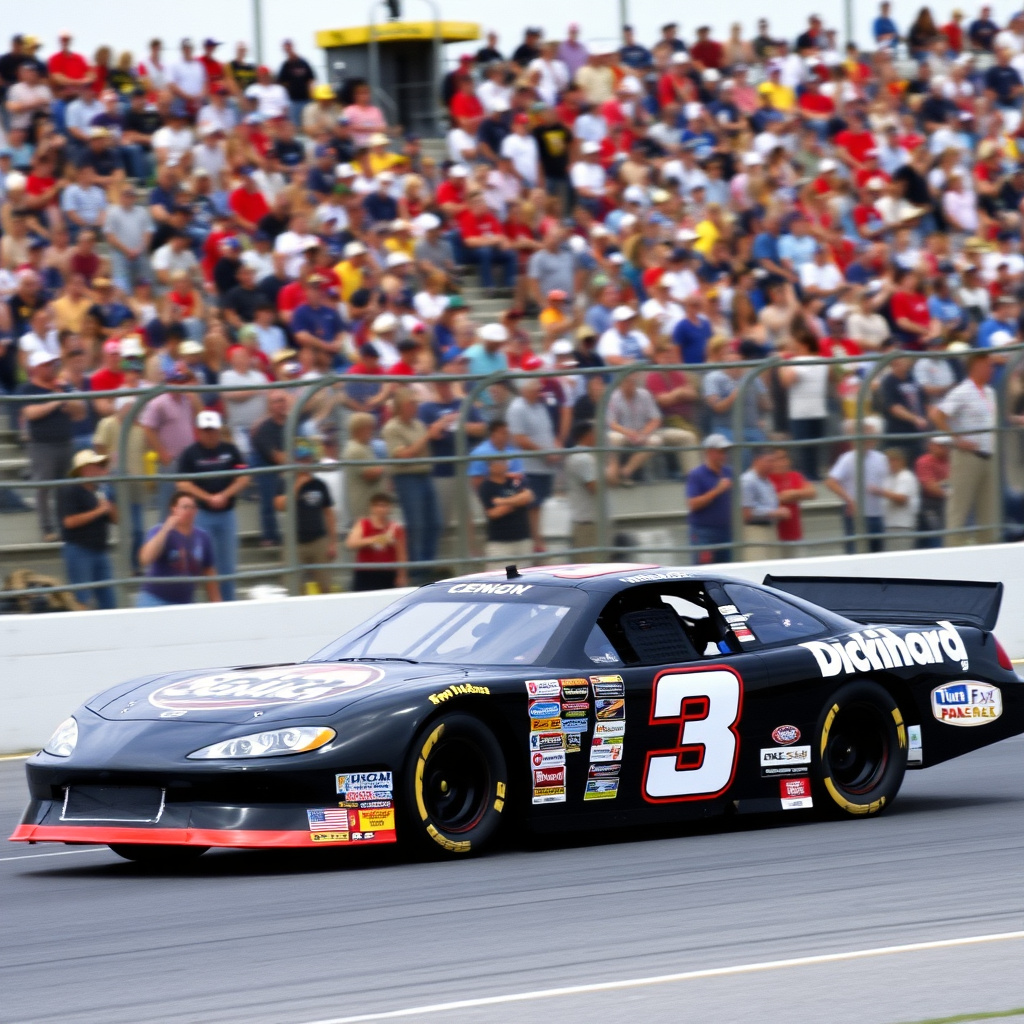


Women in NASCAR: The Trailblazers Who Paved the Way and the Rising Stars Carrying the Torch

A Sport Built on Barriers — Why Women in NASCAR Matter

NASCAR has always been a sport that rewards courage, mechanical intuition, and the willingness to push a machine past its limits. For most of its history, those qualities were assumed to belong exclusively to men. That assumption has been challenged — slowly, imperfectly, but persistently — by a small number of women who decided the barrier was worth hitting head-on.

The stakes here go beyond symbolism. NASCAR is one of the most-watched motorsports properties in North America, with a cultural footprint that shapes how millions of fans think about speed, competition, and who belongs behind the wheel. When women are absent from that picture, it sends a signal — to young girls watching from the grandstands, to sponsors deciding where to invest, and to the sport itself about what kind of future it wants.

This is not a feel-good story with a tidy ending. It's a complicated, decades-long negotiation between talent, opportunity, and institutional inertia. Understanding it means starting at the beginning.

The Original Trailblazers — Janet Guthrie and the Pioneers of the 1970s–90s

Janet Guthrie is the name every serious NASCAR conversation about women must start with. In 1977, she became the first woman to qualify and compete in the Daytona 500 — a milestone so significant it took NASCAR another four decades to fully reckon with its implications. She also became the first woman to start the Brickyard 400, racing in an era when the paddock culture was openly hostile to her presence.

Guthrie didn't have the luxury of a development program or corporate backing tailored to her situation. She ran underfunded equipment against the best drivers of her generation and still managed to complete races that many better-resourced competitors failed to finish. Her 1977 Daytona 500 start — in a car that was mechanically compromised before the green flag dropped — remains one of the more quietly remarkable performances in the race's history.

Through the 1980s and into the 1990s, Patty Moise carried that torch at the series level, competing primarily in what is now the Xfinity Series. Moise never made a Cup Series start, but she logged consistent laps in NASCAR's second tier at a time when even that was considered transgressive. Her longevity in the sport — spanning roughly a decade of competition — demonstrated something important: women weren't just capable of showing up, they were capable of staying.

Danica Patrick — The Driver Who Changed the Conversation

No female driver in NASCAR history has generated more mainstream attention than Danica Patrick, and the reasons for that are worth examining honestly. Patrick arrived in NASCAR full-time in 2012 after a career in IndyCar that included a race win at the 2008 Indy Japan 300 — making her the only woman to win an IndyCar race. That credential mattered. She wasn't a novelty act; she was a proven open-wheel competitor making a series transition.

Her NASCAR Cup Series career produced a best finish of eighth at the 2013 Daytona 500, where she also became the first woman to lead laps in that race. She ran full-time in the Cup Series through 2017. The results were modest by Cup standards — no wins, limited top-10 finishes — but the commercial and cultural impact was disproportionately large. Patrick's sponsorship deals, media presence, and mainstream crossover appeal brought NASCAR to audiences it hadn't previously reached.

The honest assessment: Patrick's on-track record in NASCAR was that of a mid-pack competitor with an underfunded program relative to the front-runners. But framing her career purely through that lens misses the point. She proved the market existed for a high-profile female NASCAR driver, which matters for every woman who comes after her.

The Road to the Cup — How Women Enter NASCAR's Developmental Pipeline

The path to the NASCAR Cup Series runs through a structured ladder system, and understanding that ladder is essential to understanding why Cup starts for women remain rare. Most drivers begin in the ARCA Menards Series, NASCAR's entry-level developmental circuit, before advancing to the NASCAR Craftsman Truck Series and then the Xfinity Series, with the Cup Series as the ultimate destination.

Each step requires not just speed, but funding. A competitive Truck Series season can cost $1–2 million or more. Xfinity is steeper. Cup is in a different financial atmosphere entirely. Female drivers face the same funding challenges as any young competitor, with the added reality that sponsorship pipelines have historically been slower to develop around women in motorsport.

The developmental series aren't just stepping stones — they're where reputations are built, crew relationships are formed, and the technical education that separates Cup-level drivers from everyone else actually happens. A driver who spends three or four seasons in the Truck Series learning superspeedway drafting, short-track setups, and pit strategy is a fundamentally different competitor than one who skips that education. This is why the series-specific experience of every female driver matters when evaluating their Cup potential.

NASCAR's Drive for Diversity — What the Program Does and What It Hasn't Done

NASCAR launched the Drive for Diversity program in 2004 as an official initiative to identify and develop talent from underrepresented groups, including women and minorities. The program provides testing opportunities, coaching, and in some cases funding assistance to drivers who might otherwise lack access to NASCAR's competitive infrastructure.

Its successes are real. Drive for Diversity has served as an early platform for several drivers who went on to meaningful NASCAR careers, and it has created a structured pathway where none previously existed. For female drivers in particular, the program has offered something the sport lacked for decades: an institutional acknowledgment that their presence is wanted.

The gaps are equally real. Drive for Diversity has not produced a female Cup Series winner, or even a female Cup Series regular contender. The program identifies talent but cannot fully solve the funding problem that limits how far that talent can develop. Critics within motorsport circles have noted that the program can function more as a public relations asset than a genuine pipeline — surfacing promising drivers without providing the sustained multi-year support that turns promising into competitive.

That's not a reason to dismiss the initiative. It's a reason to demand more from it.

Hailie Deegan and Today's Rising Stars — Who to Watch Right Now

Hailie Deegan is the most prominent female driver in NASCAR's current landscape, and her career trajectory offers a useful case study in both the opportunities and the ceiling that currently exists. Deegan, daughter of off-road racing legend Brian Deegan, came up through the ARCA Menards Series before moving to the NASCAR Craftsman Truck Series, where she competed from 2021 through 2023.

Her Truck Series results were mixed — she showed genuine speed on occasion but struggled with consistency and equipment limitations. After her contract with DGR wasn't renewed following the 2023 season, Deegan moved to other racing ventures, a transition that illustrated the fragility of NASCAR careers even for drivers with significant name recognition and sponsor support.

Comparing Deegan to Patrick is tempting but somewhat unfair to both. Patrick arrived in NASCAR with an IndyCar win on her résumé and the backing of major corporate sponsors. Deegan has navigated the developmental ladder from a younger age with less established infrastructure around her. The trajectories are different, and the sport they're competing in has changed considerably in the intervening years.

Other names worth tracking: the Drive for Diversity program continues to surface female talent at the ARCA level, and the Xfinity Series has seen occasional starts from women in recent seasons. The pipeline exists. Whether it can sustain careers long enough to produce a Cup-level contender remains the open question.

What It Will Take for a Woman to Win at NASCAR's Highest Level

A woman winning a NASCAR Cup Series race will require the convergence of three things that haven't fully aligned yet: sustained elite-level funding, a multi-year developmental arc in competitive equipment, and a team structure that prioritizes performance over the novelty factor.

The funding problem is structural. Top Cup teams spend tens of millions annually on car development, data analysis, and engineering talent. Female drivers who spend their developmental years in underfunded equipment are learning in a compromised environment — they're developing skills, but not always the specific skills that translate to winning at the Cup level.

The cultural problem is subtler but equally real. NASCAR's garage culture has evolved significantly since Janet Guthrie walked into a paddock that barely acknowledged her right to be there. But evolution isn't the same as equality. Female drivers still report navigating dynamics that their male counterparts don't face, from credibility questions with crew members to sponsor conversations that veer into appearance rather than performance.

None of this is insurmountable. The history of women in NASCAR — from Guthrie's 1977 Daytona 500 start to Deegan's Truck Series campaigns — is a history of people doing things that weren't supposed to be possible yet. The distance between today's rising stars and a Cup Series victory is real, but it's measurable. And in motorsport, measurable distances have a way of shrinking faster than anyone expects.

Frequently Asked Questions

Has a woman ever won a NASCAR Cup Series race?

No woman has won a NASCAR Cup Series race. The closest milestone remains Danica Patrick leading laps at the 2013 Daytona 500, which made her the first female driver to lead in that event. A Cup Series victory for a woman remains one of the sport's uncrossed thresholds.

Who was the first woman to compete in the Daytona 500?

Janet Guthrie was the first woman to qualify and start the Daytona 500, accomplishing that in 1977. She remains one of the most significant figures in NASCAR history and was inducted into the NASCAR Hall of Fame in 2012.

What is NASCAR's Drive for Diversity program?

Drive for Diversity is NASCAR's official initiative, launched in 2004, to develop racing talent from underrepresented groups including women and minorities. It provides testing opportunities, coaching, and developmental support to drivers who might otherwise lack access to NASCAR's competitive ladder.

Are there any women currently racing full-time in NASCAR?

The landscape shifts year to year. As of recent seasons, female representation in full-time NASCAR seats has been limited, with most activity concentrated at the ARCA Menards Series and occasional Truck or Xfinity Series starts. Hailie Deegan has been the most prominent female driver in recent years, though her schedule has varied.

How does Hailie Deegan's career compare to Danica Patrick's?

The two careers are difficult to compare directly. Patrick arrived in NASCAR after winning an IndyCar race and carried major corporate sponsorship. Deegan came up through NASCAR's developmental ladder from a younger age with different support structures. Patrick had more immediate mainstream impact; Deegan has more series-specific developmental experience. Both represent important chapters in the same ongoing story.

{{HOMEPAGE_LINKS}}