




Behind the Scenes: A Day in the Life of a NASCAR Pit Crew
Most NASCAR fans watch the race from above the pit wall. What happens below it is a different world entirely — one defined by split-second decisions, months of rehearsal, and the kind of physical conditioning you'd expect from professional athletes. The over-the-wall crew doesn't just change tires. They execute choreography at speed, under pressure, with a race position on the line every single time.
Who Makes Up a NASCAR Pit Crew?
A NASCAR Cup Series over-the-wall crew consists of five specialists, each with a non-negotiable role during a live stop. Together they form one of the most coordinated units in professional sports.
The jackman hits the car first and last — lifting it on entry and dropping it as the signal to go. It's one of the highest-impact roles physically, requiring both explosiveness and timing. The two tire changers (front and rear) use an air gun, or impact wrench, to remove five lug nuts and remount a fresh tire. The two tire carriers haul the new rubber over the wall and position it for the changer, then carry the used tire back. The gasman operates the fuel can and must fill the tank completely without spillage — a slow fill or a fuel penalty can cost more than a bad tire change. Until 2021, a catch can man collected overflow fuel; NASCAR has since eliminated that role as part of the transition to new-generation car fueling protocols.
Each person has roughly two to three seconds to complete their task within a stop. The margin between a clean stop and a chaotic one usually comes down to one person's execution, not five.
The Week Before Race Day: Practice and Drills
Pit crew preparation runs all week, not just on race weekends. Most Cup Series organizations run dedicated practice pit stops at their facilities multiple times per week, with sessions timed to the tenth of a second and reviewed on video.
Crew members train with the same intensity as traditional athletes. Tire changers develop explosive hip and shoulder power to drive the impact wrench through five lug nuts at full torque without losing grip. Jackmen work on their vertical leap and lateral movement — getting under the car fast and positioning precisely. Carriers focus on sprint speed and the arm strength needed to vault a 70-pound tire over the wall cleanly.
A typical training week includes rehearsal drills where the team runs back-to-back stops, sometimes 20 or 30 in a session. The pit crew coach reviews footage, identifies fractions of a second being lost at specific transition points, and adjusts technique accordingly. Some organizations use slow-motion cameras and laser timing gates to measure where time is gained or lost between each crew member's movements.
The physical conditioning side is often underestimated by casual fans. These aren't mechanics who happen to work fast — many came from college athletics, and some have backgrounds in football, baseball, or track and field. The athleticism requirement is real and measurable.
Race Morning: Setup, Communication, and Preparation
On race day, the crew's work begins well before the green flag drops. Equipment checks, strategy briefings, and pit road setup typically start three to four hours before the race.
The crew arrives early to prepare pit road equipment — organizing tire stacks, confirming the air gun is calibrated correctly, and laying out the fuel cans. Every tool has a designated position. The consistency of that setup matters because in a stop, nobody has time to look for anything.
The crew chief runs the pre-race strategy briefing, walking through the projected fuel window, when four-tire stops versus two-tire stops make sense, and what the crew should expect from pit road traffic. This is when decisions get made about how aggressive the team will be on tire strategy and whether track position priority will influence stop timing.
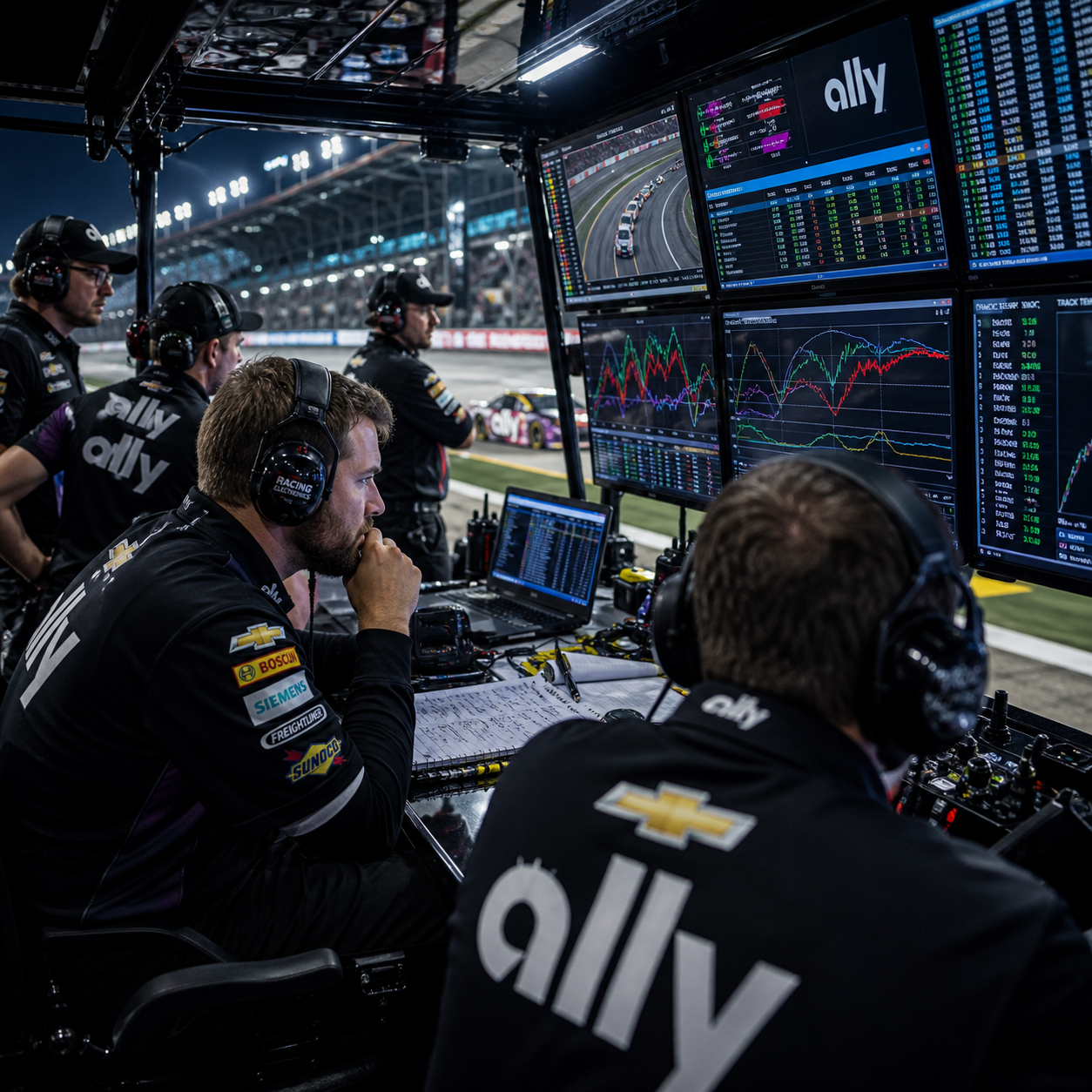
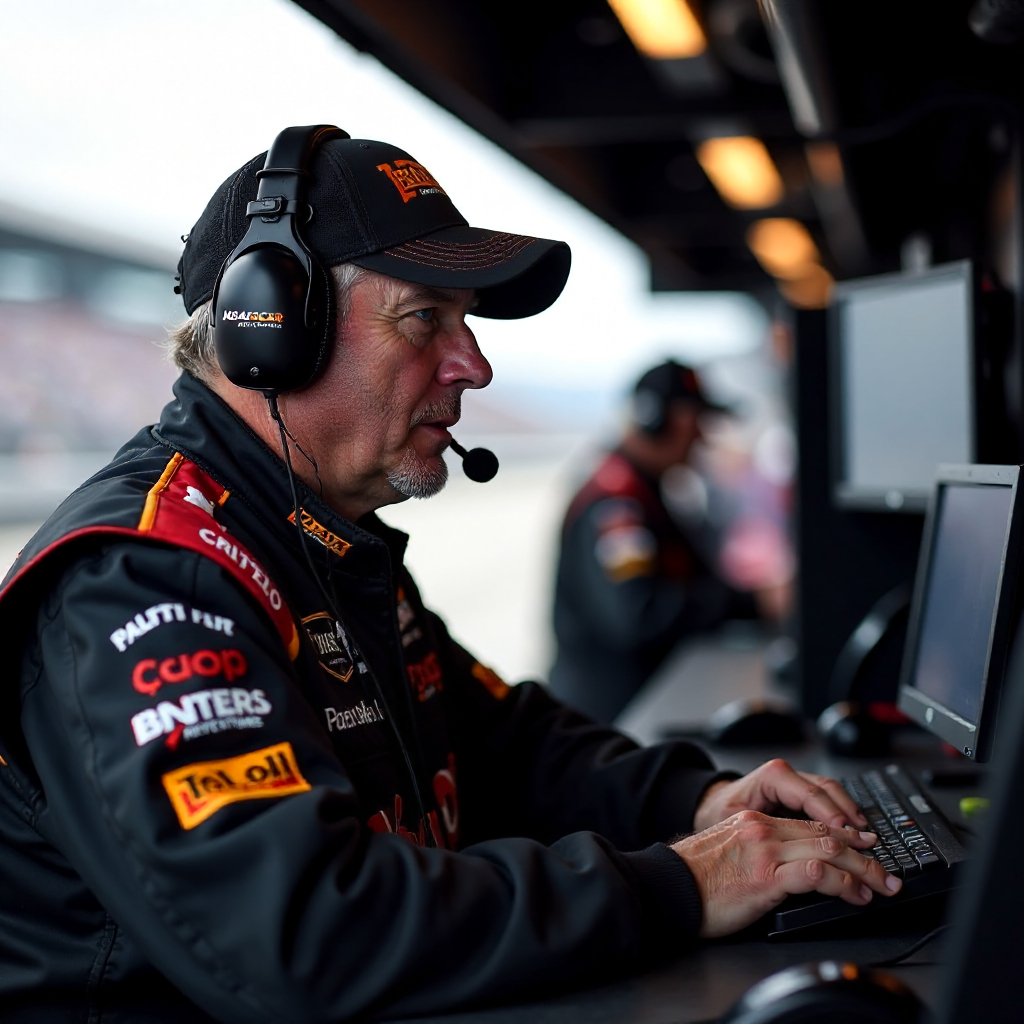
Communication between the crew chief in the pit box and the over-the-wall crew is constant throughout race day. The crew chief monitors fuel mileage lap by lap and tracks competitor pit cycles in real time. The crew needs to be ready to go over the wall on short notice if a caution falls at an unexpected moment — which is most of the time.
The Pit Stop Itself: Seconds That Decide Races
A clean four-tire stop in the NASCAR Cup Series takes roughly 10 to 13 seconds. The difference between the top tier and the middle of the pack is often one second — which can translate to two or three positions on pit road exit.
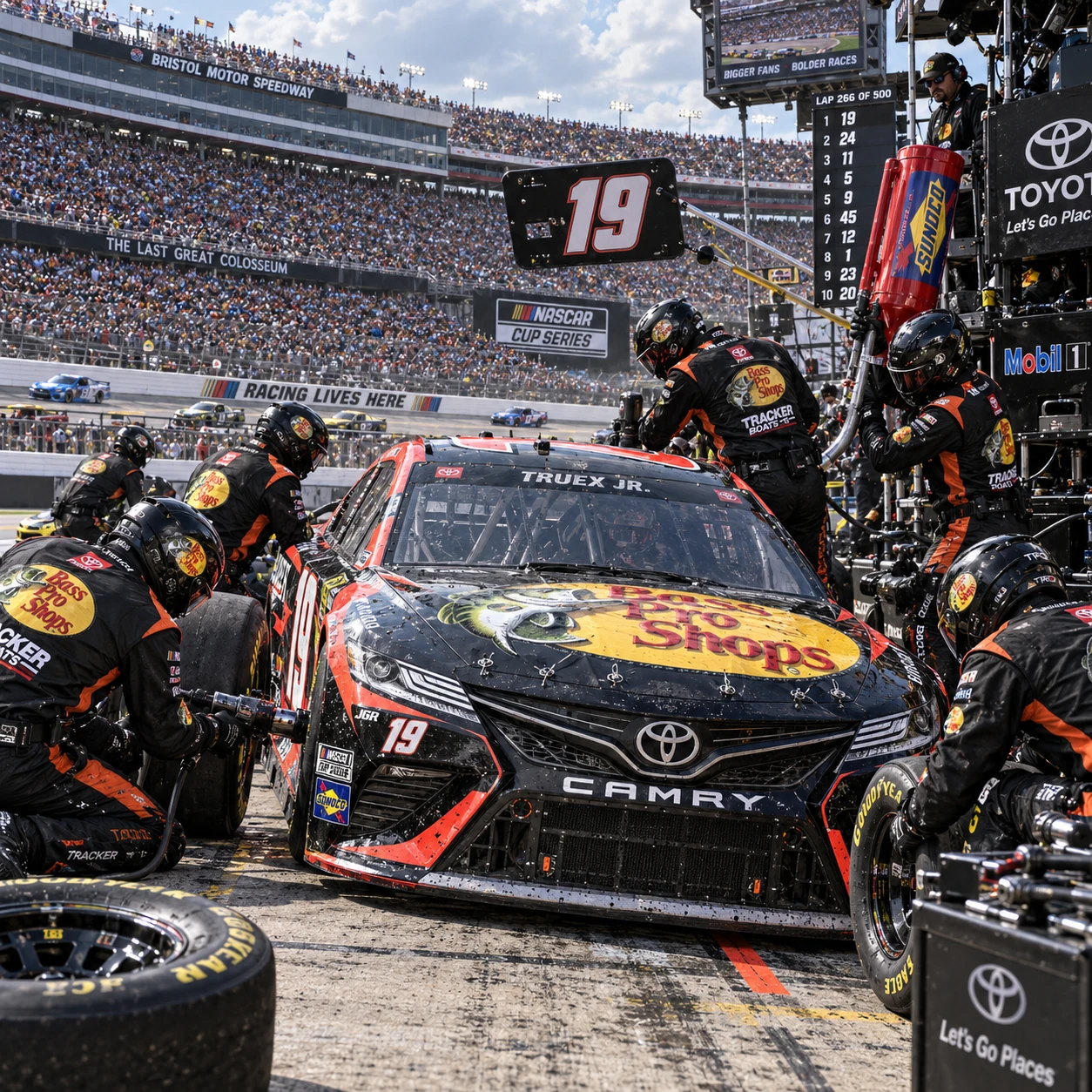
Here's the sequence in real time: The driver hits the pit road speed limiter entering their stall. The jackman clears the wall as the car rolls in, lifting the right side the moment the car stops. The front tire changer is already at the wheel before the jack fully extends. Both changers remove and replace their tires while carriers swap the rubber. The jackman drops the right side and sprints to the left. The entire left-side sequence mirrors the right. The gasman fills fuel throughout, timing his finish to match the last tire going on. When the jackman drops the left rear, the driver goes.
What separates a 10-second stop from an 11-second one? Usually it's the reaction time at the lug nuts — a changer who hesitates coming off one nut before moving to the next loses fractions that compound across all five. It can also be a carrier who doesn't present the tire at the right angle, forcing the changer to adjust their grip. One misaligned movement creates a cascade that adds a full second to the clock.
Teams track pit stop clock data obsessively. The best organizations in the Cup Series have documented their average stop times down to individual role contributions, allowing them to pinpoint exactly who needs to improve and by how much.
When Things Go Wrong: Penalties, Mistakes, and Recovery
Pit road penalties are among the most consequential mistakes in NASCAR racing, and they happen to every team. The most common is speeding on pit road — the driver's responsibility, but one the crew chief monitors closely.
From the crew's side, the most damaging errors include a tire not fully seated (a loose wheel penalty), going over the wall too early before the car is stopped, or equipment leaving the pit box and entering the racing surface. Each of these carries a drive-through penalty or stop-and-go, which costs roughly 20 to 30 seconds and usually multiple positions.
A loose wheel is the nightmare scenario. If lug nuts aren't fully torqued, the tire can fail at speed. NASCAR officials watch for wheels that appear to wobble on exit and will black-flag the car back to pit road. The crew has to diagnose what happened, fix it, and send the car back out — often a lap or more down by the time it's resolved.
When a stop goes wrong, the crew chief's job is to stay ahead of the damage. That might mean calling the car back in on the next lap if a problem is suspected, adjusting the pit strategy to make up lost ground, or deciding to ride out a damaged pit road position rather than burn another set of tires chasing it back.
Pit Strategy: The Crew Chief's Chess Match
Pit strategy is where crew execution and race management converge. The crew chief uses tire wear data, fuel mileage calculations, and real-time track position information to decide when and how to pit — and the crew's job is to execute that decision flawlessly, whatever it is.
The core tension in NASCAR pit strategy is track position versus tire advantage. A two-tire stop is faster than a four-tire stop by roughly four to six seconds, which usually means exiting pit road ahead of cars that took four tires. But fresher rear tires on a long run will typically outpace older ones, meaning the car that gave up track position to take four tires may be faster in the closing laps when it counts.
Fuel mileage adds another layer. On some tracks, the fuel window doesn't always align with the tire window, forcing the crew chief to choose between pitting for tires at the optimal wear point or stretching a stint to save fuel for a better strategic position later. Teams that can accurately calculate how many laps they can run on a tank have a genuine competitive advantage — that knowledge lets them delay pit stops and inherit positions when competitors are forced in early.
The crew itself doesn't make those calls, but they're deeply embedded in the decision loop. A crew that consistently delivers sub-11-second stops gives the crew chief more strategic options. A crew that averages 13 seconds effectively narrows the playbook.
Life as a Pit Crew Member: Career Path and Culture
Most pit crew members come to NASCAR through a non-traditional route. Organizations like the NASCAR Drive for Diversity program and independent pit crew development schools actively recruit from college athletic programs — particularly football, track, and baseball. Raw athleticism is the starting point; the technical skills are taught after.
The career path typically starts at the lower NASCAR series — Craftsman Truck Series or Xfinity Series — where the pace is slightly slower and the pressure slightly lower. Crew members who demonstrate consistent timing and clean technique move up. A top-tier Cup Series crew member can earn between $150,000 and $300,000 annually, with elite specialists at winning organizations earning more. It's a significant income for a role that barely registers in public awareness.
The lifestyle is demanding. The Cup Series runs 36 points races per season across roughly 10 months, with most events requiring travel Thursday through Sunday. Add testing, development work, and weekly training sessions, and the schedule is genuinely grueling. Injuries — particularly shoulder and knee issues from repetitive high-load movements — are a real occupational risk.
Despite the physical toll, crew culture tends to be tight. The over-the-wall crew operates with a level of interdependence that builds trust quickly. When a stop goes badly, the crew reviews it together. When it goes well, everyone knows exactly what they contributed. There's very little ambiguity about performance in this job — the clock doesn't lie.
Frequently Asked Questions
How long does a NASCAR pit stop take?
A competitive four-tire stop in the NASCAR Cup Series takes between 10 and 13 seconds. Elite crews regularly post stops under 11 seconds. A two-tire stop runs roughly four to six seconds faster than a full four-tire change.
How many people are allowed over the wall during a pit stop?
NASCAR allows five crew members over the wall during a pit stop. Each has a designated role — jackman, two tire changers, two tire carriers — and the gasman operates from the pit box side of the wall.
What happens if a pit crew member commits a penalty during a stop?
Depending on the infraction, the penalty is typically a drive-through penalty or a stop-and-go, both of which cost significant time and positions. Serious equipment violations can result in additional sanctions at NASCAR's discretion.
How do pit crew members train for their roles?
Crew members train through repeated rehearsal drills, reviewed on video and timed precisely. Physical conditioning focuses on explosive strength, sprint speed, and the specific movement patterns each role demands. Most Cup Series organizations have dedicated pit crew training facilities and coaches.
How much does a NASCAR pit crew member earn?
Salaries vary widely by series and role. At the Cup Series level, experienced crew members typically earn between $150,000 and $300,000 per year. Top specialists at winning organizations may earn more, particularly when race bonuses are factored in.