








Environmental Initiatives in NASCAR: Sustainability Efforts Explained

NASCAR is built around speed, noise, fuel, and large-scale travel, so environmental sustainability presents a complicated engineering and logistics challenge. The sport’s footprint includes race-car emissions, freight movement, spectator transportation, electricity use, water consumption, tire management, and the waste generated by packed race weekends.

That challenge has pushed NASCAR, racetracks, teams, manufacturers, sponsors, and fans to examine practical ways to reduce environmental impact. Progress does not mean making stock-car racing instantly zero-emission. It means improving each part of the racing ecosystem while protecting competition, safety, and the race-day experience.

Why Sustainability Matters in NASCAR

Sustainability matters in NASCAR because motorsports combine energy-intensive competition with major event operations, transportation demands, and material use. Environmental initiatives can reduce waste and resource consumption while helping the sport remain relevant to manufacturers, sponsors, communities, and environmentally conscious fans.

A NASCAR weekend functions like a temporary city. Racetracks accommodate large crowds, hospitality areas, media centers, garages, concession operations, parking fields, emergency services, and extensive broadcast infrastructure. Every component requires energy, water, fuel, materials, or transportation.

The race cars themselves are only one part of the picture. Carbon emissions may come from the competition vehicles, haulers moving equipment between venues, flights and road journeys taken by personnel, electricity used at the facility, and private cars bringing fans to the track. This broader view is essential because improving one category does not automatically solve the whole problem.

Environmental performance also affects NASCAR’s business relationships. Automotive manufacturers are developing lower-emission vehicles and alternative powertrains, while sponsors increasingly publish environmental, social, and governance goals. Racetracks operate within local communities and must manage issues such as traffic, noise, water use, litter, and post-event cleanup.

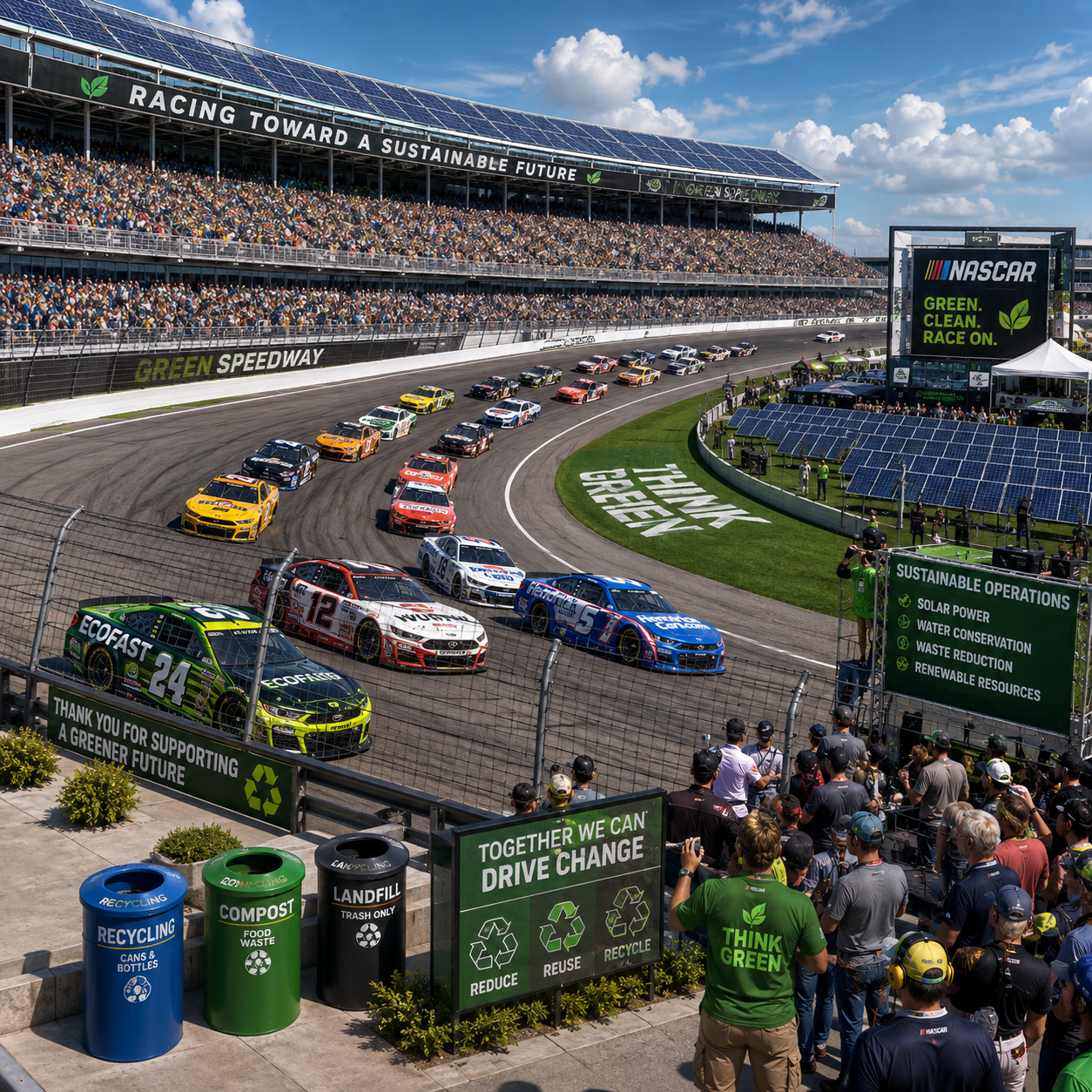
For fans, sustainability is most visible through practical changes: clearly marked recycling bins, electronic ticketing, cleaner facilities, shuttle services, energy-efficient lighting, and community programs. These measures rarely change the racing itself, but they can make a large event less wasteful and more efficient.

NASCAR’s Approach to Reducing Environmental Impact

NASCAR’s sustainability approach centers on emissions reduction, resource efficiency, responsible event management, and cooperation across the racing industry. Because NASCAR does not control every racetrack, team, manufacturer, or fan journey, meaningful progress depends on coordinated action rather than a single technical fix.

An organization-wide framework generally considers several connected areas:

  • Energy: improving efficiency and increasing the use of renewable energy where practical.
  • Fuel: evaluating lower-carbon and sustainably sourced alternatives that meet demanding racing requirements.
  • Materials: reducing unnecessary packaging, reusing equipment, and increasing waste diversion.
  • Water: limiting consumption through efficient fixtures, monitoring, reuse, and improved landscaping practices.
  • Mobility: examining freight, team travel, staff transportation, and fan access to venues.
  • Reporting: measuring environmental performance so claims can be tested against consistent data.

The most useful distinction is between direct and indirect impacts. Direct impacts include fuel burned by race cars and electricity consumed at a facility. Indirect impacts can include the manufacture of tires and parts, logistics contracts, spectator travel, and the production of food and merchandise sold at an event.

NASCAR can influence some areas through technical rules, supplier standards, event policies, and partnerships. Other areas remain venue-specific or depend on individual business decisions. That makes careful language important: a recycling program at one racetrack should not be presented as proof that every NASCAR venue operates identically.

Authoritative frameworks such as the U.S. Environmental Protection Agency’s guidance on greener products can help explain why life-cycle thinking matters. A lower-impact product must be assessed across sourcing, manufacturing, use, maintenance, and disposal, not only at the moment it reaches the racetrack.

Cleaner Fuels and Evolving Racing Technology

Cleaner fuels and improved vehicle technology offer NASCAR the most direct route to reducing race-car emissions while preserving the character of stock-car competition. Sustainable fuels can lower the carbon intensity of racing, although their benefits depend on how they are produced, transported, blended, and used.

Alternative and sustainable fuels may include renewable components made from biological feedstocks or other lower-carbon production pathways. The key question is not simply whether a fuel is labeled renewable. NASCAR and its technical partners must also evaluate engine compatibility, supply reliability, energy density, safety, cost, and performance across an entire race distance.

A fuel that works in a controlled test may create new challenges at scale. Producing enough consistent fuel for multiple series, transporting it to tracks across the country, and maintaining the same specifications for every competitor require significant planning. Choosing a lower-carbon fuel for one benefit may mean accepting higher cost or limited availability during the transition.

Fuel efficiency can improve through engine calibration, aerodynamic development, improved lubrication, reduced idling, and better operational practices. However, racing technology involves trade-offs. Components designed for maximum performance may require specialized materials, complex manufacturing, or frequent replacement, so efficiency gains should be assessed alongside the full resource footprint.

Electric and hybrid racing technology also has potential, but it should be viewed realistically. Battery-electric systems can reduce tailpipe emissions during operation, yet battery weight, charging infrastructure, cooling requirements, race duration, and the source of electricity all influence their suitability. Hybrid systems could eventually support selected formats or provide energy recovery without immediately replacing traditional stock-car powertrains.

For NASCAR, the likely path is evolutionary. Lower-carbon fuels, more efficient engines, auxiliary electrification, and improved technical measurement can develop together. Fans may see changes first in support equipment, safety vehicles, transport fleets, or demonstration programs before any major change to the primary race car.

Greener Racetracks and Race-Day Operations

Greener racetracks reduce environmental impact through renewable energy, efficient facilities, waste diversion, water conservation, and better transportation planning. Venue-level changes matter because they affect every event, not only the cars on track.

Energy and renewable power

Race venues can lower electricity demand with LED lighting, efficient heating and cooling systems, smart controls, upgraded building envelopes, and better scheduling of temporary equipment. Solar installations may provide onsite generation, while renewable electricity purchases can address some remaining demand where local market rules allow.

Renewable energy does not remove every impact. Solar panels require materials and land, and a venue must still manage peak loads during crowded events. The practical goal is to combine generation with efficiency, storage, and accurate energy monitoring.

Waste reduction and recycling

Waste programs can include clearly labeled collection points, reusable serviceware, food-waste diversion, used-oil recovery, scrap-metal recycling, tire management, and reduced packaging. The system works only when bins are placed where fans actually walk and signage explains what belongs in each container.

Contamination is a persistent problem. A recycling bin filled with food residue or mixed materials may send an entire load to disposal. Racetracks therefore need trained staff, vendor requirements, post-event audits, and realistic local recycling capacity rather than impressive-looking bin counts alone.

Water conservation and transportation

Water conservation measures may include low-flow fixtures, leak detection, drought-tolerant landscaping, rainwater management, and carefully controlled track-cleaning practices. Large venues can also use event-day monitoring to identify abnormal consumption and compare similar race weekends.

Transportation creates another major opportunity. Shuttle services, coordinated rides, public transit connections, remote parking, freight consolidation, and efficient team-hauler routing can reduce unnecessary vehicle trips. These approaches work best when they are convenient and affordable; asking fans to change behavior without providing practical alternatives rarely produces strong participation.

The Role of Teams, Manufacturers, Sponsors, and Fans

Sustainability extends beyond NASCAR leadership because teams, manufacturers, sponsors, and fans control important parts of the sport’s supply chain and daily behavior. Their decisions influence materials, logistics, energy use, product development, and the public visibility of environmental initiatives.

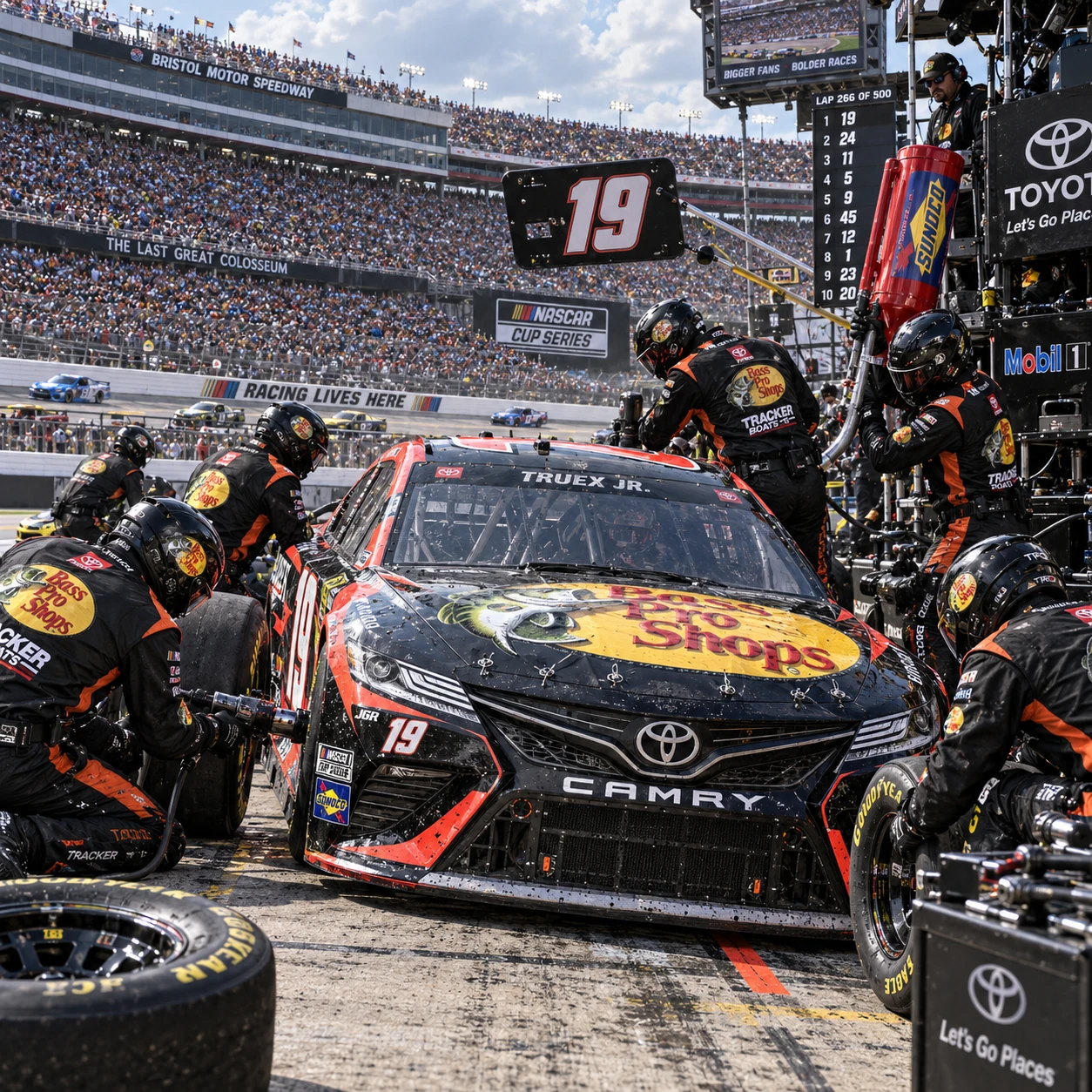
NASCAR teams can reduce impact through efficient shop operations, LED lighting, waste sorting, responsible chemical storage, equipment reuse, and smarter freight planning. A team may also examine how often parts are shipped, whether packaging can be returned to suppliers, and whether hospitality operations use disposable products unnecessarily.

Manufacturers bring research and development expertise. Their work on efficient engines, lightweight materials, renewable fuels, hybrid systems, batteries, thermal management, and lower-impact manufacturing can inform both racing and road-car technology. Still, racing applications often use specialized components that cannot transfer directly to production vehicles.

Sponsors can provide funding, technical knowledge, measurement tools, and consumer education. A partnership is most credible when it supports a measurable operational change, such as renewable electricity, improved waste tracking, or lower-emission logistics. Branding alone does not demonstrate environmental progress.

Fans also shape results. Reusable bottles, proper waste sorting, carpooling, shuttle use, digital tickets, and responsible disposal of food and merchandise can reduce the impact of a race visit. Fans should receive clear instructions before arrival, because behavior is easier to change when the sustainable choice is the simplest choice.

Community programs add another dimension. Racetracks can work with schools, local governments, conservation groups, and nearby residents on recycling education, habitat improvements, road safety, and workforce training. These programs connect a race venue to the community that hosts it year after year.

Measuring Progress and Addressing Challenges

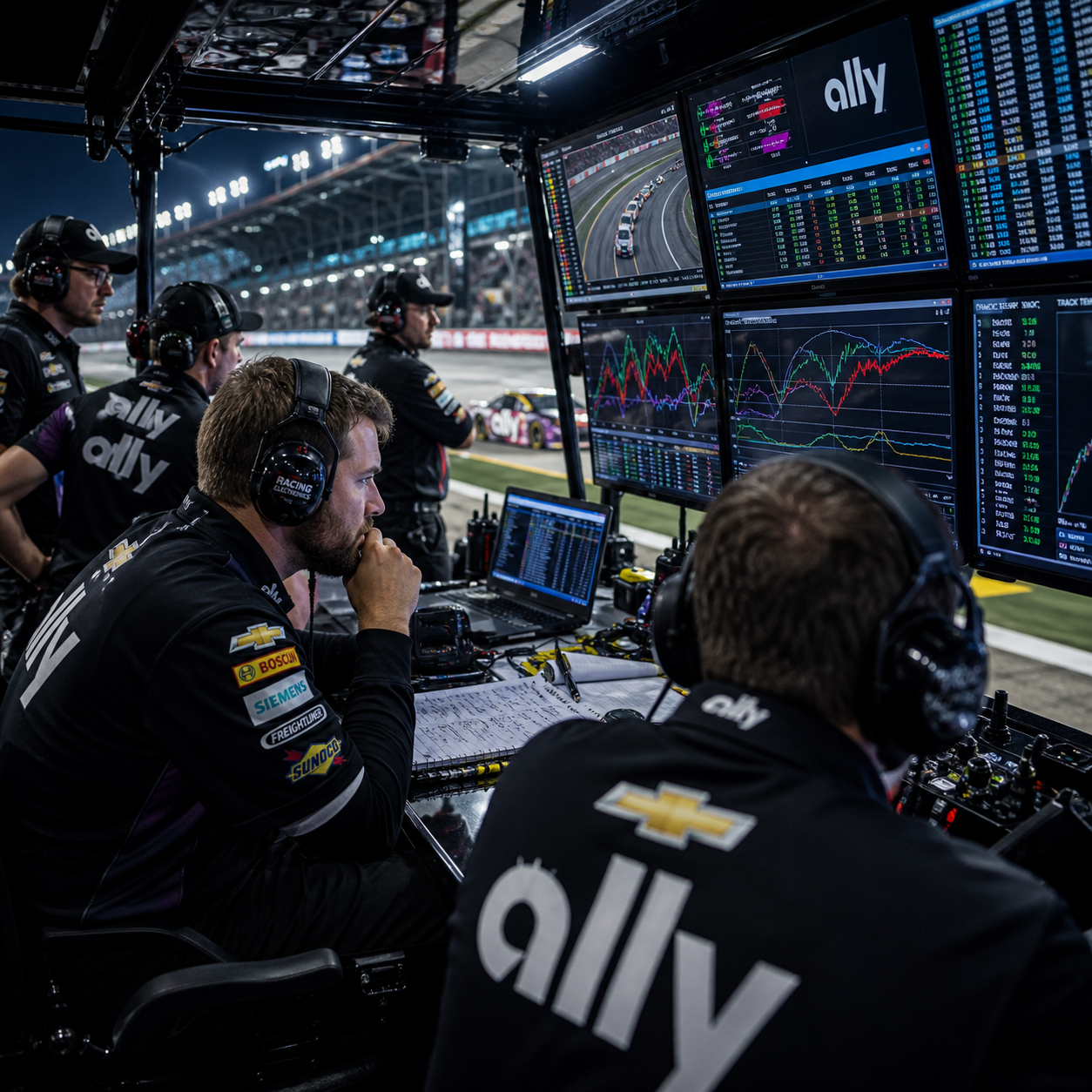
Environmental progress in NASCAR should be measured with transparent data covering fuel, energy, waste, water, transportation, and supply-chain impacts. Without consistent baselines and reporting boundaries, it is difficult to distinguish a genuine improvement from a short-term promotional claim.

Useful indicators may include:

  • Fuel consumed per race, test session, or competitive mile.
  • Energy used per event and the percentage supplied by renewable sources.
  • Waste generated per attendee and the percentage diverted from landfill.
  • Water use by venue, including irrigation and cleaning.
  • Freight mileage, fleet fuel use, and attendance-related transportation.
  • Carbon emissions reported by scope, with assumptions explained.

Measurement has limits. A venue may report high recycling diversion while excluding construction waste, or a fuel may reduce tailpipe carbon while requiring energy-intensive production upstream. Comparisons also become difficult when one track includes fan travel and another reports only facility operations.

The sport faces genuine constraints. NASCAR races require high power output, safety systems, tires, replacement parts, long-distance logistics, and rapid setup between venues. Extreme heat can increase cooling and electricity demand. Large attendance creates traffic and waste peaks that do not occur during ordinary facility operations.

Common mistakes can weaken otherwise useful programs:

  • Counting bins instead of outcomes: More recycling containers do not guarantee higher diversion. Track actual weights and contamination rates.
  • Focusing only on the race car: Ignoring freight, fan travel, and facilities leaves major sources of impact unexamined. Use a whole-event inventory.
  • Overstating electric technology: Treating hybrid or electric systems as an immediate replacement for stock cars overlooks battery, charging, and performance constraints. Present them as developing options.
  • Making unverified claims: A sustainability statement without a baseline, boundary, or reporting method is difficult to evaluate. Publish definitions and repeat measurements.

What the Future Could Hold for Sustainable NASCAR

The future of sustainable NASCAR will likely involve gradual improvements in fuels, logistics, facilities, reporting, and racing technology rather than one dramatic conversion. The strongest strategy will reduce impact in several categories at once while preserving competitive fairness and spectator appeal.

Cleaner fuels are likely to remain central because they can work with familiar engine architecture and existing race procedures. Their long-term value will depend on credible sourcing, scalable production, lifecycle emissions, and consistent availability.

Racetracks may expand energy-efficiency projects, onsite renewable generation, water monitoring, waste audits, and low-emission transportation options. Digital systems can make these programs easier to track, from smart meters in garages to attendance-based waste calculations.

Teams and manufacturers may also test hybrid components, electrified auxiliary systems, lightweight materials, efficient transport equipment, and alternative power for support fleets. Some technologies may enter NASCAR through safety vehicles or event infrastructure before they reach the main competition.

For readers who ask whether motorsports can become more environmentally sustainable, the answer is yes, provided sustainability is treated as a measurable operating discipline rather than a slogan. NASCAR will still involve energy use and emissions. The meaningful question is whether each season produces better fuel efficiency, lower-carbon logistics, more responsible venues, less waste, and clearer evidence of progress.

Frequently Asked Questions About NASCAR Sustainability

What environmental initiatives is NASCAR pursuing?

NASCAR is associated with efforts involving sustainable and alternative fuels, resource efficiency, waste reduction, responsible event operations, renewable energy discussions, and collaboration with teams, manufacturers, sponsors, and racetracks. The exact programs and adoption levels can vary by series, venue, and event.

How can NASCAR reduce emissions from race cars and travel?

Race-car emissions can be addressed through lower-carbon fuels, improved fuel efficiency, and developing hybrid technology. Travel emissions require freight consolidation, efficient haulers, fleet improvements, remote parking, shuttles, public transit links, and better planning for team and fan journeys.

Are NASCAR racetracks adopting renewable energy and recycling programs?

Many large event venues explore renewable energy, efficient lighting, recycling, waste diversion, water conservation, and improved transportation operations. Implementation differs among racetracks, so individual venue reporting provides the most accurate picture.

What role could sustainable fuels play in NASCAR’s future?

Sustainable fuels could reduce the carbon intensity of racing while allowing combustion engines to remain part of the competition. Their effectiveness depends on production methods, lifecycle emissions, supply, cost, safety, and compatibility with NASCAR engines.

Can motorsports become more environmentally sustainable?

Yes. Motorsports can reduce environmental impact through coordinated improvements to fuel, vehicles, facilities, waste, water, logistics, and fan transportation. Becoming more sustainable does not mean eliminating every impact; it means measuring impacts honestly and reducing them over time.

{{HOMEPAGE_LINKS}}